

Where topics come from
As you chat, the assistant proposes topics it thinks apply — “Rate limiting”, “Prisma migrations”, “Onboarding copy”. A proposal is only ever a suggestion. It becomes a real label when you accept it, and nothing is attached to your chats without you saying so. Open the suggestions from the sparkle button in the sidebar header — it carries a badge when any are waiting — or from the graph page while it is still empty. Each one shows the topic, a one-line gloss of what it means, and which chat prompted it. Accept attaches it; dismiss turns it down, and it will not be offered again for that chat. Accepted topics appear as small chips under the chat’s header.Making a topic yourself
You do not have to wait to be offered one. Open Pin topic on the chat’s header and type a name: matching topics narrow as you type, and if none fit, Create ”…” and pin it makes it.

The chat header: an accepted topic as a chip, and the find-or-create picker open
Suggestions arrive as you keep chatting, so a brand-new workspace has none.
This is the ordinary starting state, not a problem to fix — and the graph
says as much rather than showing you an empty canvas:
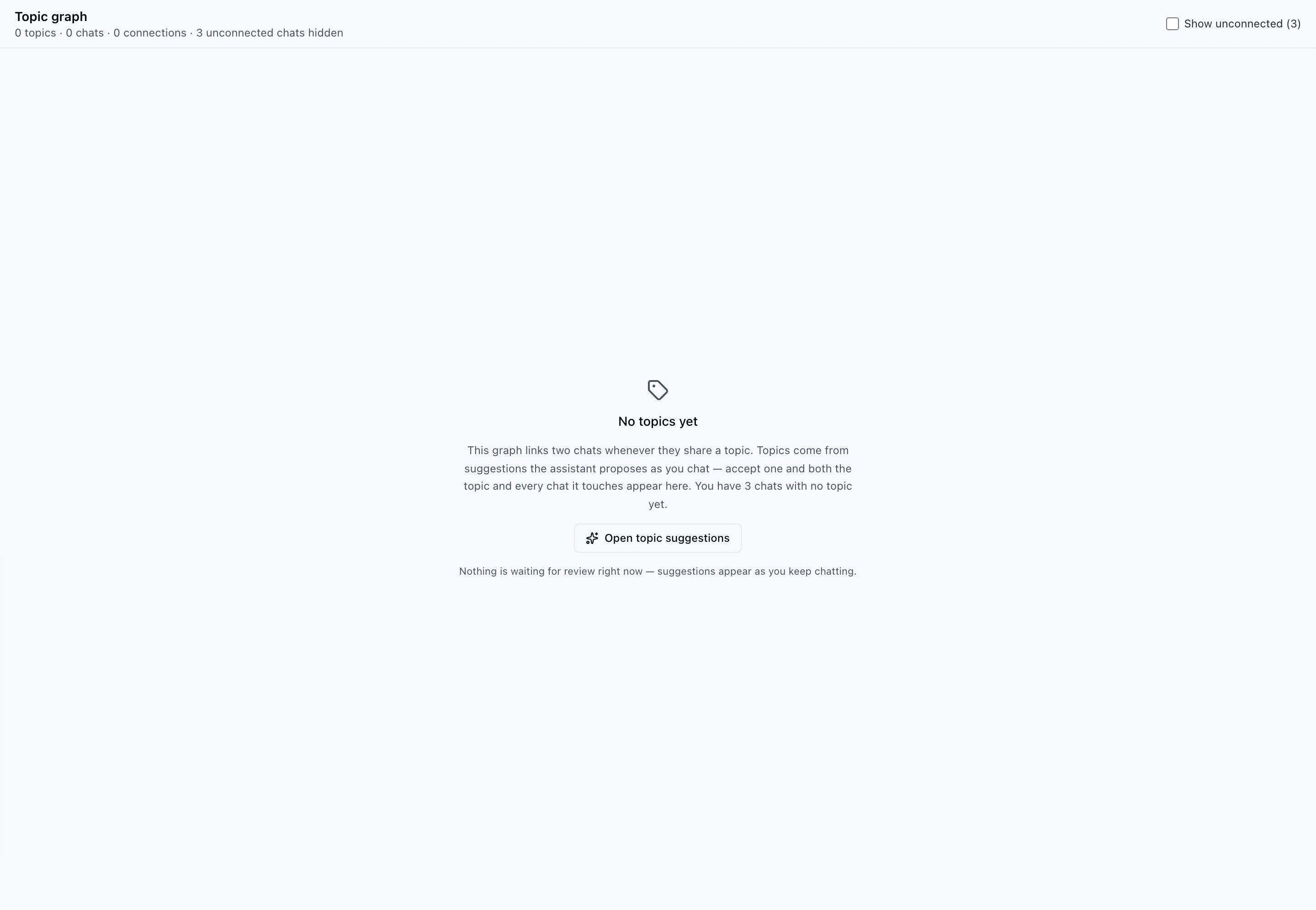
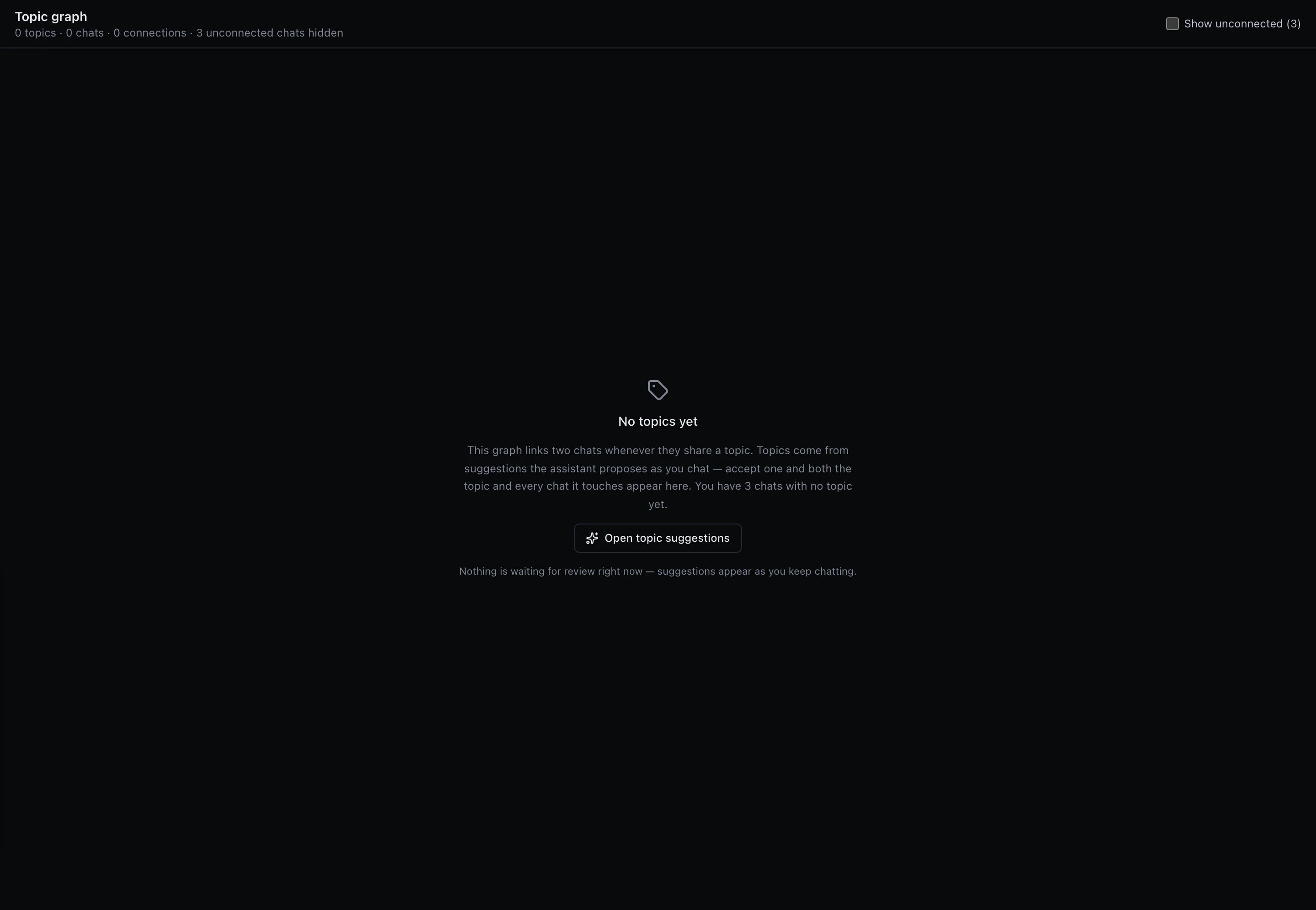
A workspace with no topics yet
The graph
The network button in the sidebar header opens the topic graph — “which chats share a topic”. Every dot is either a topic or a chat, and a line means that chat carries that topic. Two chats are connected when they share a topic — there is no direct chat-to-chat link, which is what keeps the picture readable: clusters form around subjects instead of everything joining everything. Dot size is degree: a topic on twelve chats is drawn larger than one on two.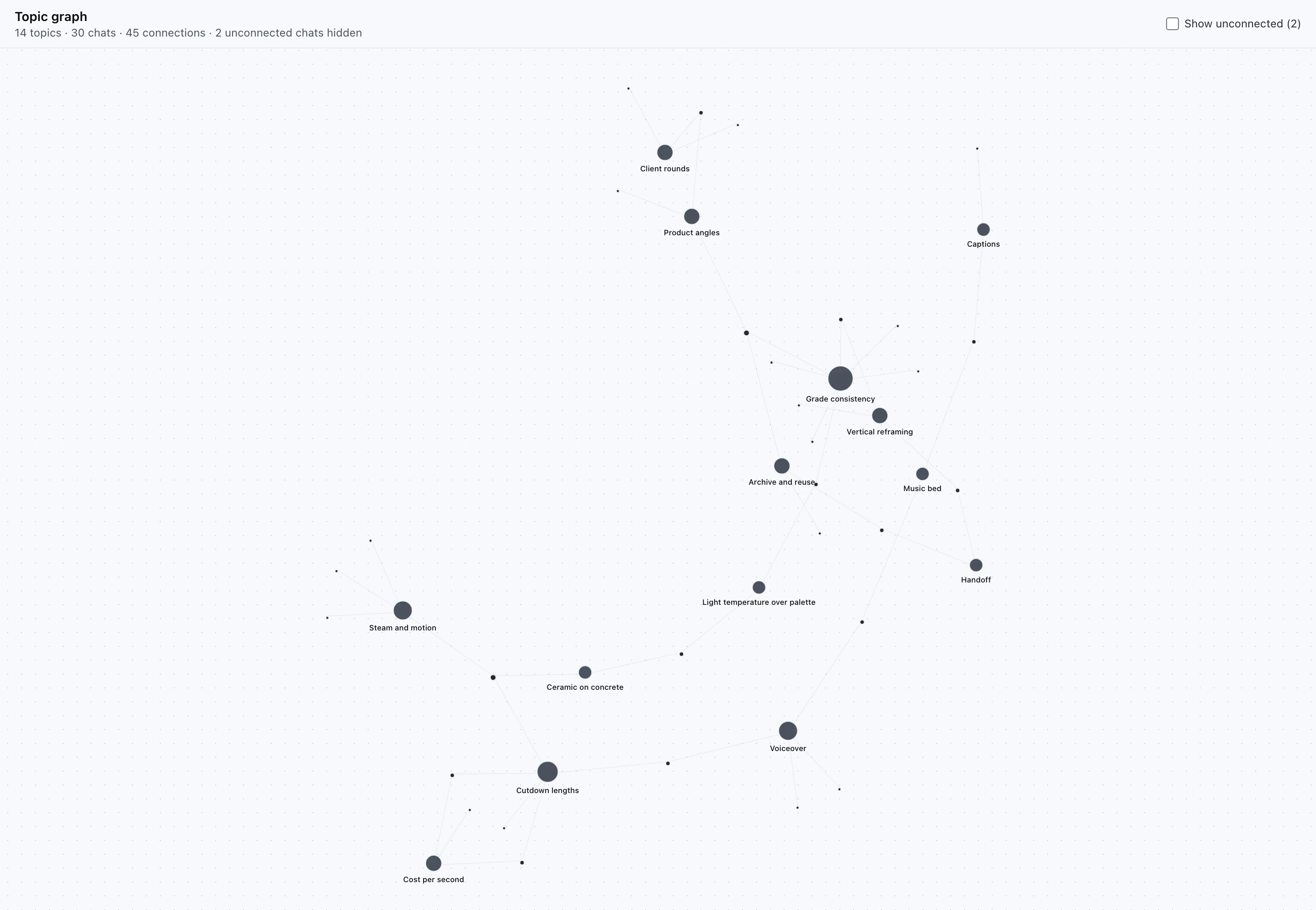
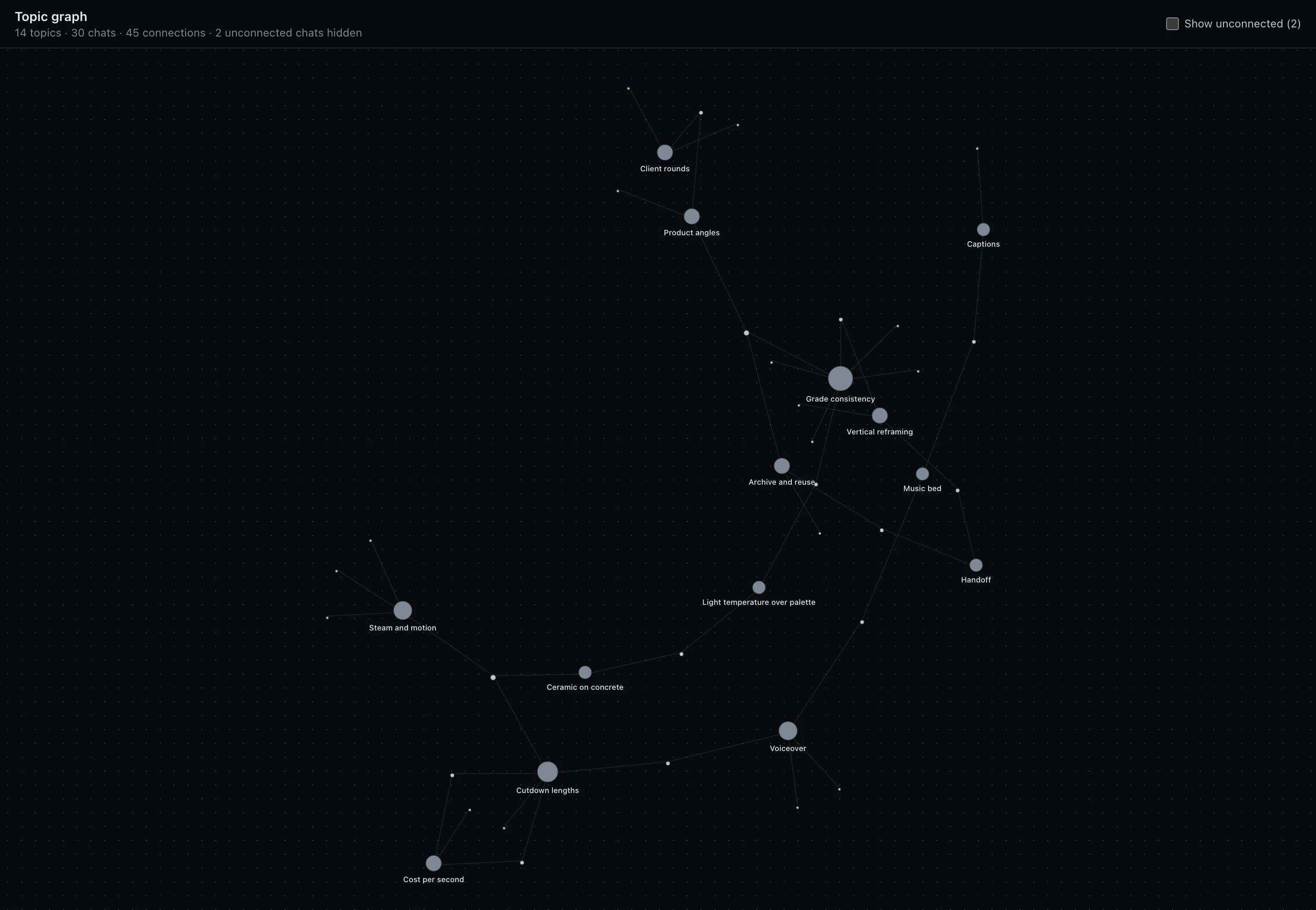
The line under the title always states the whole estate.
- Hover anything — it and everything one step away light up, the rest fades almost away. This is how you read a dense graph: point at a topic to see its chats, or at a chat to see its topics.
- Click a topic — its chats are listed beside the canvas by name.
- Click a chat — opens it.
- Drag any dot — the neighbours follow, then settle. Useful for pulling a cluster apart to look inside it.
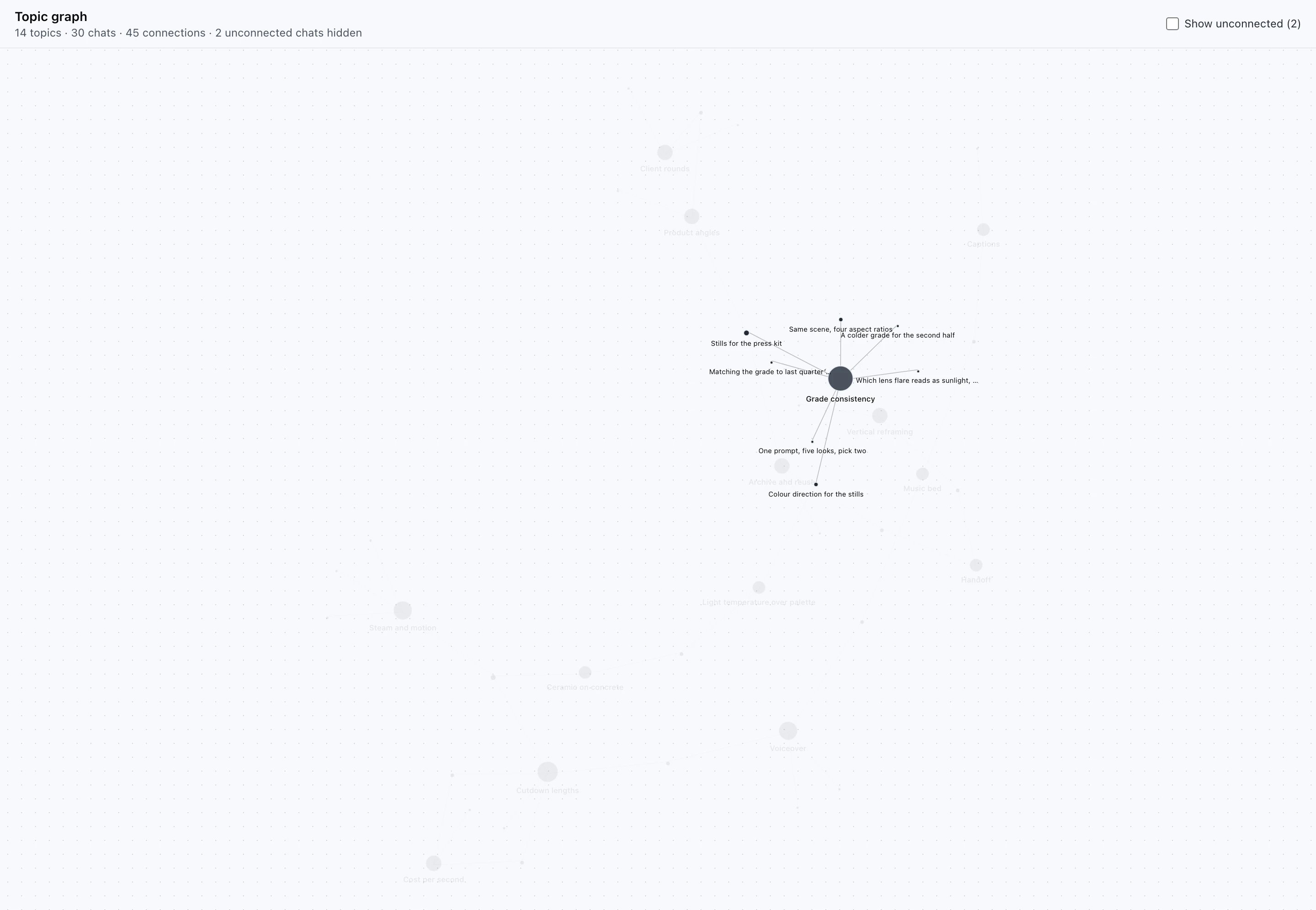
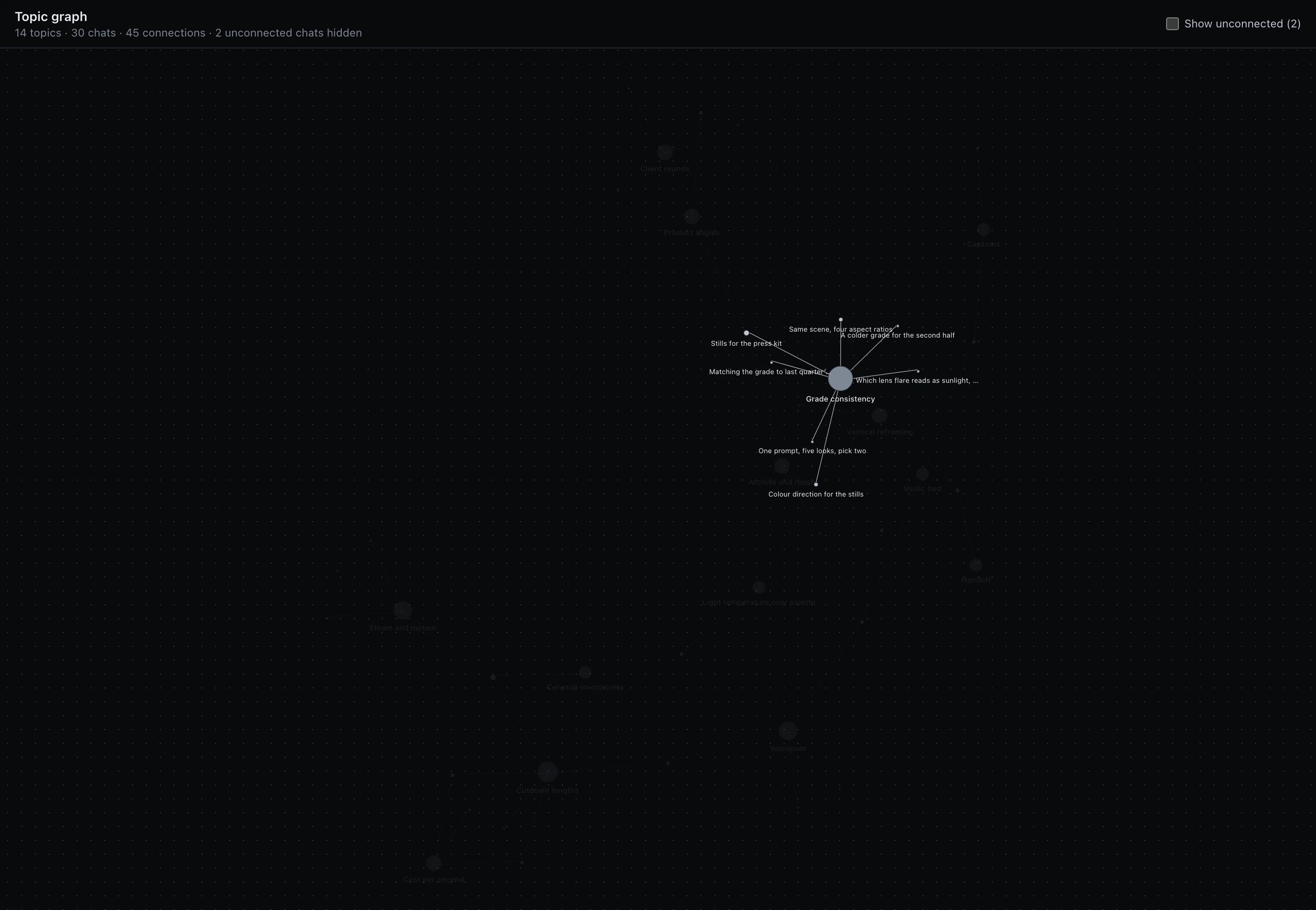
Pointing at one topic. Its chats name themselves; everything unrelated recedes.
Pinning a topic to a chat
Recall normally follows resemblance: the assistant pulls in passages that look like what you just typed. That misses the case where you know an old thread is relevant even though nothing you are about to write resembles it. A pin says so explicitly. On the chat’s header, use Pin topic to pick one, or click a chip that is already there. From then on, that chat’s recall reserves part of its budget for material from chats carrying that topic. Two things are worth understanding about what a pin does:- It reserves, it does not restrict. A pin can claim at most two of the five recall slots, and only if there is anything worth pulling. Everything else continues to work exactly as before, and a forgotten pin can never make the assistant blind to the rest of your history.
- It lowers the bar, it does not remove it. A pin is evidence of relevance the model cannot see for itself, so pinned material is admitted on weaker resemblance than usual — but still has to resemble the conversation. Pinning “Salon renovation” will not drag planters into a question about Kubernetes.
Unpinning
Click a pinned chip to unpin. The topic stays on the chat — unpinning only stops it steering recall, so the chat keeps its label and stays where it is in the graph. To take the topic off the chat entirely, use the × on the chip. That deletes the link and stops the assistant proposing that topic for this chat again — the topic itself stays in the workspace, on every other chat carrying it.Renaming and merging topics is not possible yet.
What a pin cannot do
A pin only reaches what you could already read. Pinning a topic whose chats live in aProject only project, from a chat outside it, brings back nothing. That
is deliberate: a control that widened access would be a way around project
isolation. See Memory and context.